
Beyond the Rules: How Life Experiences Forge a Writer

Grace Paley once said: "Write what will stop your breath if you don't write."
That's what it's like for me when I have a story in my head and I'm not able to immediately write it down or share it with someone. I simply can't breathe. That's why it is so important for me, as a writer to hone, not just skills, but the process that puts those skills to task.

Early last month I was asked to be the spotlight author for the Vancouver chapter of the Willamette Writers writing club. It's a brief fifteen-minute segment at the beginning of the meeting that highlights the writing process of one of the chapter members. It was an honor to be asked to do this, and even though I had only published a few things in the college literary journal, I was assured that every writer had a voice and the group would want to hear my story, just like all the other stories of all the other writers in the group.
So, I prepared a presentation. Everything short of a Navy PowerPoint. I even gathered visual aids (for reasons I will discuss later), made flash cards. I took the assignment very seriously so that if I failed, it wouldn't be from lack of trying to succeed. What I found in doing this was that I didn't know what was important to me or my process until I endeavored on this task. Things surfaced in my memory that I knew were there, shaping my writing, but hadn't been identified before. So, I shared my unorthodox writing journey with the group, and now I'd like to share it with you.
The Six Pillars of a Writer's Soul
Over the almost five decades I've walked upon this ever-changing rock we call home, there were particular periods in my life that became, unknowingly, lessons for my future writing self. These six lessons have become the pillars that hold up my writing, my rules, my tools, and my purpose.
Lesson 1: Embracing Imperfection
I had a tough time in third grade. I started a new language: computers, I was accepted into the gifted program and at the same time my grades dropped dramatically, my parents separated and started a long road to divorce, and my Tourette's (In my case a near-silent enemy until it wasn't) first reared its marionette strings. Mrs. Johnston was not the most pleasant of teachers to have when things were awry, especially to this level. However, the memory I hold most dear from elementary school happened because of her.

One morning we all came into class as was greeted with an easel before us. After the Pledge of Allegiance, Mrs. Johnston brought in an elderly Japanese man who immediately walked to the easel without saying a word. He had his back to the class and was dressed in traditional Japanese garb. He stared at the blank canvas for what seemed like an eternity to our nine- and ten-year-old minds. He then picked up a paint brush and dipped it in the ceramic mug of black paint sitting on a stool beside him and started making lines on the canvas.
The lines turned out to be mountains. He silently painted a house on the edge of the canvas looking out onto the mountains and then he started painting trees with different brush techniques. But, in one fateful movement, a drop of noir fell to the canvas in an unplanned way creating a glob and a smudge. This is when the artist spoke for the first time. In broken English he explained that in his cultural painting, a mistake like the one he made is inevitable and should not be erased or forgotten. He should not toss the painting away and start again. He said the mistake was divine fortune, and an opportunity to change his plan for the better. "Not a mistake," he said as he made the blob into a crane standing with one leg on a rock overlooking the sea, "a destined event to be built upon."
Because of this, integration, rather than erasing an error became a key principle in my life.
Lesson 2: Writing as Catharsis
Once I reached middle school, I started to have my own independent voice, but my life was in constant flux. I was torn between two households, moving back and forth to appease each parent or because one of them ran out of money. My grades were horrible because I found my dad's sax and if the homework wasn't done at school there was no way it was getting done at home.

One of my teachers helped me find an inner poetic opus that was busting at the seams to be let out into the world. Mrs. Brand looked past my faults and taught me (and the rest of the class) poetry using colors. This really was a spark that set me on a path to being able to write about these bottled-up feelings I had stewing inside me ready to explode. We made a laminated book of poems with twelve or so different colors with a table of contents and everything. I knew right then that I wanted to publish one day, when I was old and grey of course.
It was like a gateway drug to my renaissance-side. I was already playing music, but after Mrs. Brand's class, I was looking for things in the world to write about, I was looking for colors. I was taking pictures and drawing things I saw in the world. Then I wrote a poem about how I wanted to feel about a girl and it was published in the local paper. I didn't have the understanding then of how important that was, but I do now, and I owe my love of poetry to Mrs. Brand.
Lesson 3: Crafting the Rules
In tenth grade I was met with a wanted challenge. I was put into Dr. Dan Chalk's English class. We read, we wrote, we performed. To say the class was a gauntlet of a literary mosaic would be an understatement. Dr. Chalk first gave us the rules of writing (including his own no-nonsense cheat sheet that I wish I still had), then we read Silas Marner (Elliot), Adventures of Huckleberry Finn (Twain), Julias Caesar (Shakespeare), and from Medea (Euripides) and Oedipus Rex and Antigone (Sophicles). After each reading, we wrote about what we read or prepared a reading from the plays.

When Dr. Chalk read a passage, it was a performance. It was like watching Brando in Julius Caesar only better. Dr. Chalk would show us how Mark Antony delivered his speech to make the people of rise up against the establishment. He subtly demonstrated how other people in history used rhetoric and repetition and manipulation to stir nations into controlled chaos.
The rules were distracting and annoying at first, like bumpers guarding the gutters when you're bowling. Then, after many talks with Dr. Chalk, I began to respect them and use them. My Tourette's and OCD took them on as pet projects and I began to see mistakes in other people's published writing and especially mine. Dr. Chalk's class will forever haunt me but will also be my most favorite class I've ever taken.
Lesson 4: The Art of Story
While I was playing music in college, I was working in a coffee shop and a music/bookstore. I met a cast of characters during this time that fit into no pigeon-holes. A group that is so eclectic and diverse that that any attempt of description would do them no justice at all. However, one fateful encounter turned into a life-long friendship.

While I was building a massive endcap for the jazz cd section of the store to celebrate the release of Ken Burns's Jazz, a regular came in and was sent to me to help him. This gentleman usually dealt with the music manager, but since he was out that day, he got me. The gentleman started by saying, "I need to fill my Jazz Bag," as he was slapping a burlap sack from a not-so-local grocery store. "The name's Dr. Jazz," he said. From that moment forward I was hooked.
I helped him with some albums that he could use for his jazz show, JazzStreet, on the local college radio station and he, in turn, asked me to sit in that weekend. Sitting in with him that weekend became a regular gig for the next two years, paid in story, experience gained, and brotherhood.
Dr. Jazz had a way of weaving a yarn in between the notes of a song so as to not just listen to the music but to understand the art and the muse behind the piece and the artist. He was a truly giving soul who taught me and all of his listeners the importance of storytelling to not just the jazz idiom, but to life in general. We are the only ones who can further disseminate the things we experience.
When Dr. Jazz told a story, he made you feel like you were seeing the iceberg beneath the water for the first time. He'd make you see the duck's feet, the sun above the haze, the mysteries beyond the veil. He'd make you feel like you were inside the story with jazz all around you. That became my aim, my goal, to become that kind of storyteller.
Lesson 5: Lines Forged by the Waves
In 2007 I joined the Navy to make sure my family had adequate insurance and the means to survive. I spent 11 years in the Navy, saw 17 different countries, circumnavigated the world, deployed twice, and gained many new friends.

In my first tour as SEAOPDET out of NAS Whidbey Island, I spent many 20-hour days working on "the boat" as an aviation electronics technician. When I was able to get some rack time, I had the hardest time getting to sleep. It could have had something to do with the catapults being situated right above my rack or the fact I had all these ideas in my head, and I couldn't shut my mind off.
I took to journaling and then my journaling turned to stories, and I was finally able to chase dreams. The Navy gave me discipline and purpose by day and a passion to pursue at night. I was able to audition and entertain my own writing rules to rule my brain waves and hone my craft.
Seeing the stars on the flight deck in the middle of an Atlantic transit, more stars than three lifetimes could count, was life changing. So was seeing flying fish, secret bunkers on Majorca, and the Indian Ocean outside the hanger bay so still it looked like glass. I was filled with not only the discipline to write better, but the experiences to drive a vivid imagination.
Lesson 6: Uncovering My Voice
After the Navy, after Covid, after mourning from an unspeakable tragedy, I enrolled at Clark College in an attempt to right a previous wrong, to finally get my degree after multiple failed attempts. When my disabilities from the military began to catch up with me, preventing me from continuing my music degree, I decided to switch my focus to writing full time and applying my credits to a transfer associate's degree.
The English department at Clark is S-tier to say the least. The professors cared about what we wrote, how we were feeling when it was written, and what we were reading to strengthen our writing skills. Professors like Elizabeth Donley, Jill Darley-Vanis, Joe Pitkin, Dawn Knopf, and the late Dr. Julian Nelson made a student's education at Clark more like that with those students who were getting education at Ivy Leagues.
The faculty provided guidance on which rules to absolutely follow, and which were OK to bend. They nurtured my writing as my vision started to give way to a distinct voice. And, though it was a bit of a unique voice with a cowboy attitude, they did nothing but encourage me to keep writing.
Thanks to this Prof. Donley, I was nominated and earned third place in the fiction/non-fiction category of the Hawkins/Gallivan Award for my short story: "Into the Dark." Thanks to Prof. Pitkin, I learned the importance of not writing the expected and staying away from cliche as much as possible. This was a tough realization when coming to the realization that I would have to scrap two-thirds of my seven-thousand-word short story, "The Sand Trap" and rewrite from the ground up with just a basic framework and an idea for a new ending. Thanks to Professor Knopf and her editors at The Swift, I was able to get two poems and a short story published.
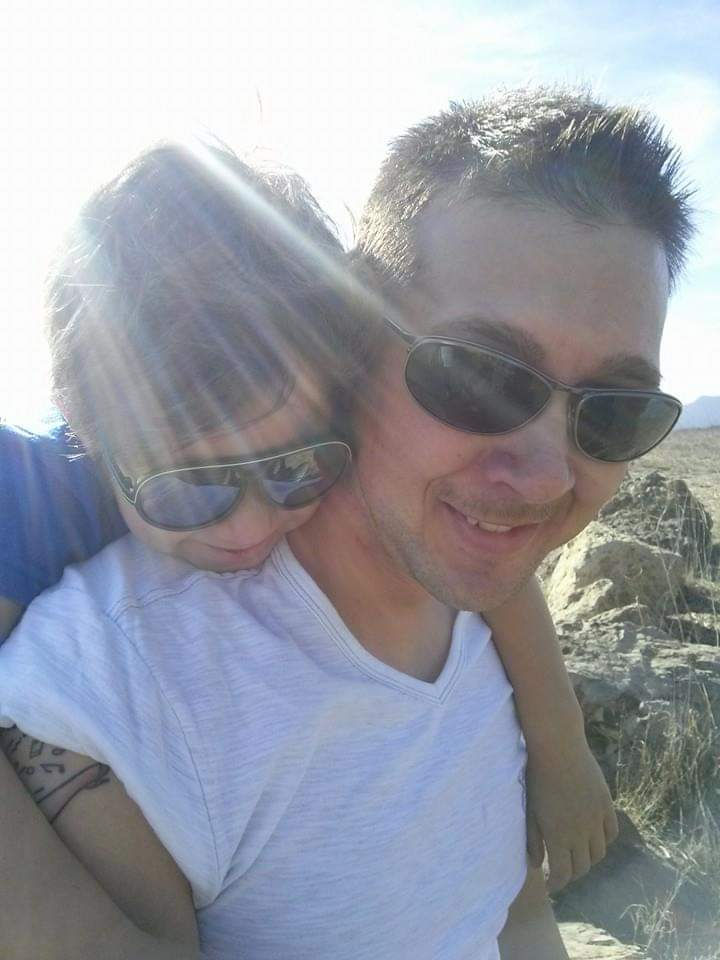
Thanks to caring guidance from Prof. Darley-Vanis I was able to write through my trauma crafting a narrative non-fiction short story chronicling the darkness I went through following my son's death. Her class was instrumental in helping me find peace through the pain instead of around it.
And thanks to a chance meeting just four months before his death, Dr. Julian Nelson pulled me back from the edge of jumping off the writing train to go all in in the corporate world. We talked about our love of photography, travel, languages, and even numbers. He told me not to write what I know, but to write about everything, in all forms if that was what I was into, poetry, short story, novella, novel, flash fiction, memoir, non-fiction. He told me to follow the story and write the experience.
Challenge accepted.
The Writer's Toolkit and Philosophy
These six pillars form a solid foundation to shape and hold my writing philosophy and the toolkit with the tools I now use to write the story of my experiences and my imagination.

The Four Rules of Writing: R.E.A.D.
Resilience: Integrate failure and rejection as data for growth, not personal defeat. Everyone fails. Do not stress failure; learn from rejection. Lessons learned from failure are more effective learning tools than those learned from successes.
Execution: Complete daily writing tasks including daily writing goals, craft study, social interactions, reading those who came before us, and studying a word of the day.
Adaptability: When things go awry, improvise, adapt, and overcome. If that fails, don't be afraid to blow shit up.
Diligence: "Always Look Right Twice" - Never overlook the subtle details of the world. Never take loved ones or important things for granted. Always make time for what matters most.

The Toolkit
Process: I cannot write without visualizing the cinematics of the words in my head. I see the story laid playing out in front of me much like a battle on a holographic table from Star Wars or a HO-scale life-like train set in mountainside city where you can see all the happenings in real time. The injection of photography in my daily routine has also given me direct prompts to aid my storytelling.
Essential tools: Notebooks, earphones, a computer, a camera, and my Plaud recording device help me capture ideas and bring my stories to life.
If I had to put a Stetson on top of my "Cowboy Writer" persona I've built here, it would be that using your senses, especially your ear is your most valuable tool. Listening to the people and the world around you will give you so much insight into nature's framework. Everyone and everything from the diner in the seat behind you sipping on a Lord Bergamot tea to the spruce sprouting up through the melting snow has a story to tell.
It is up to you to find it and share it with the world.


Comments